Tanner Springs Park
Once a wetland and industrial area, Portland's Pearl District has become a vibrant neighborhood over the past 30 years. As development continues into the old rail yards, a new park is being created to introduce green space to the landscape.
-
DREISEITLconsulting
Park Design, Landscape,Architecture, Water Design, Blue-Green Infrastructure, and ArtLocation
Portland, Oregon, United States of AmericaCollaborators
GreenWorks PCClient
Portland Parks and RecreationTimeline
Design: 2002- 2004 | Construction: 2004- 2005, 2010Site Area
0.4 ha / 1 acreAward
ASLA Oregon 2006, ULI Open Space Award Finalist 2011 | Design Review Com. 2003Status
Completed*This project was originally produced by Atelier Dreiseitl under the leadership of Herbert Dreiseitl. Since its merger in the year 2013 with the Ramboll Group A/S this project and the copyright is owned by Ramboll.

The City of Portland, Oregon, chose to go down this ecological path with the regeneration of an old, industrial downtown city neighbourhood, the Pearl District.
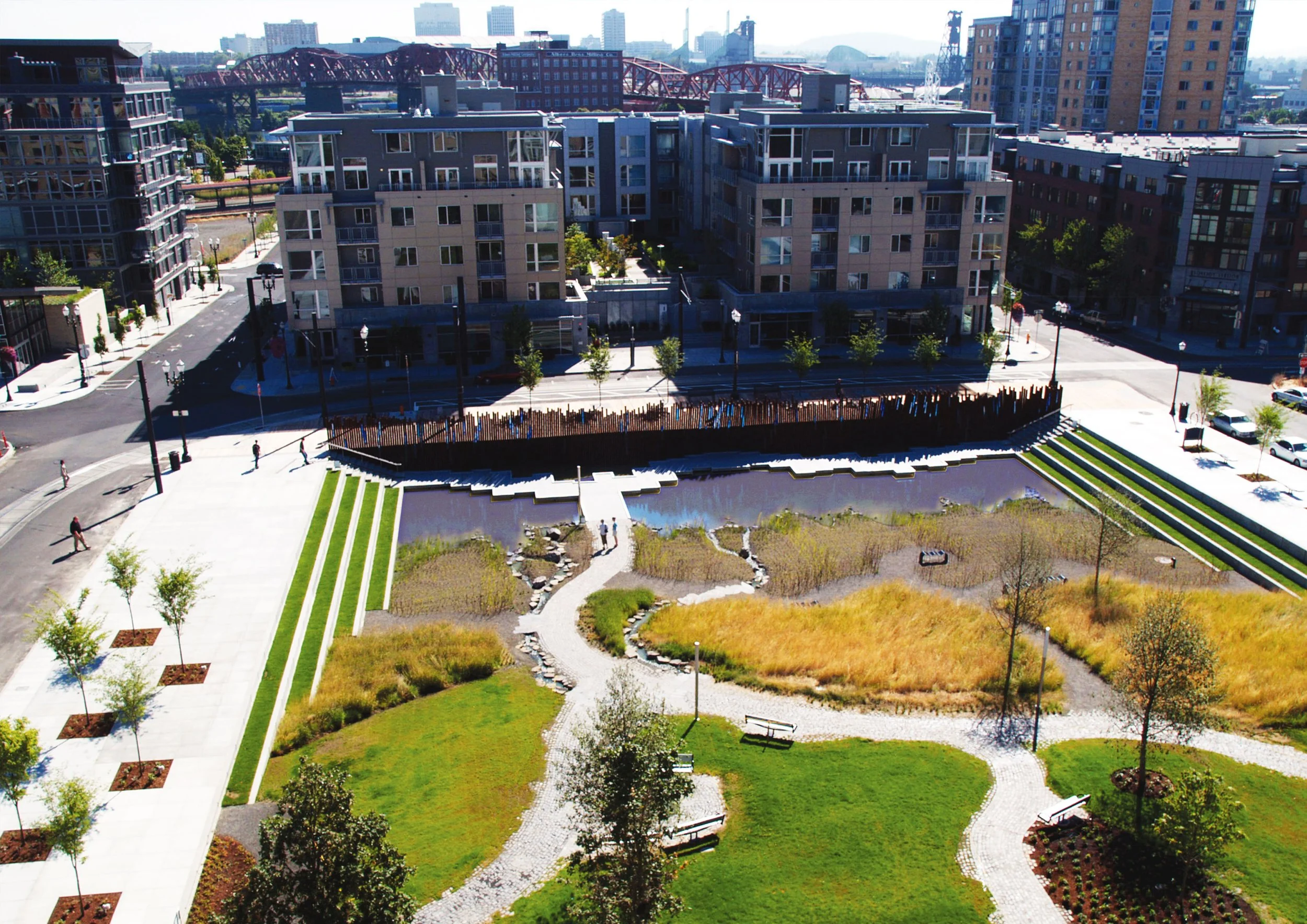
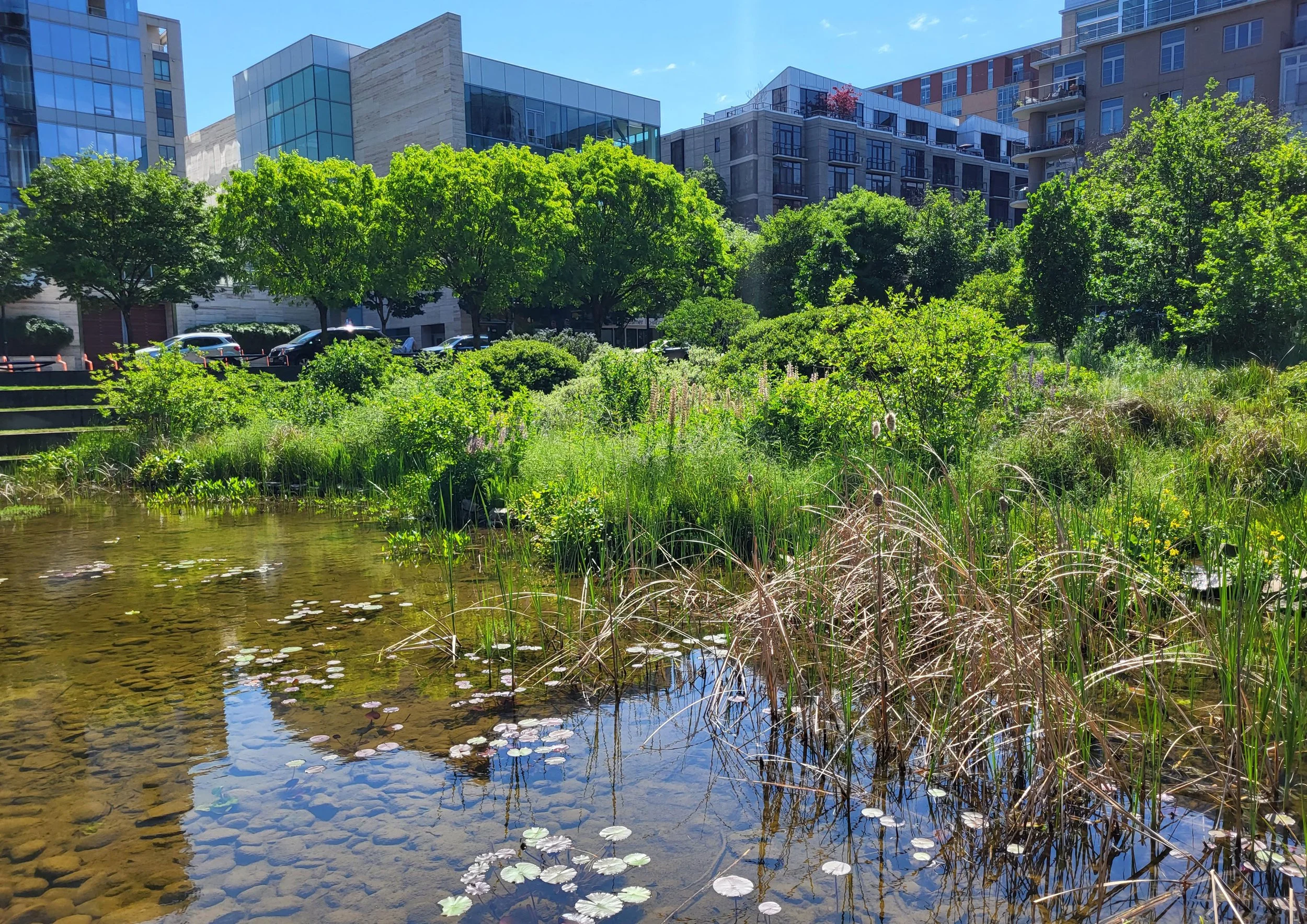
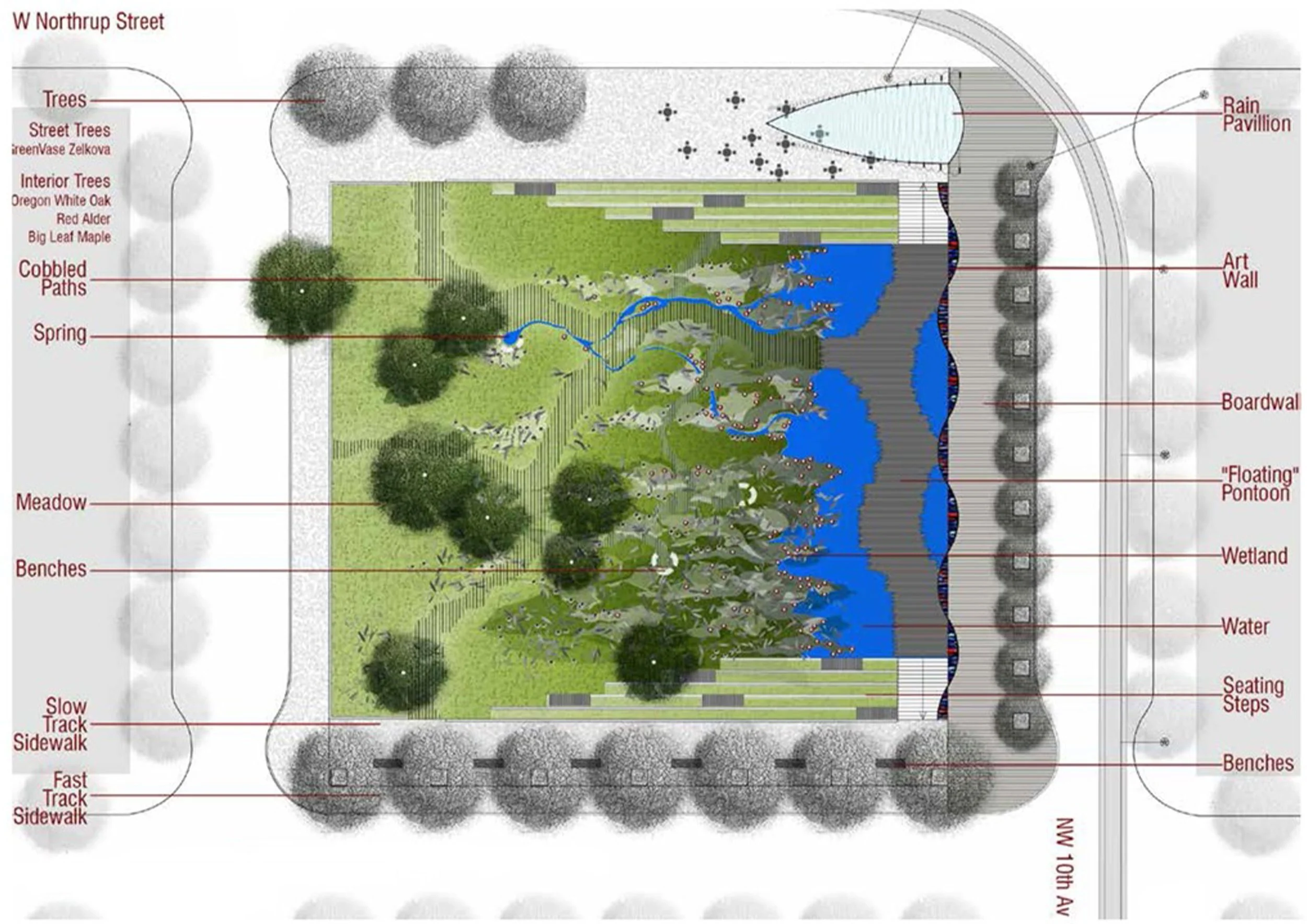
The park is like a viewport to the past. The long-forgotten wetland habitat is restored to the full glory of its plants and animals. Little springs bubble up at the top of a large open grassy meadow, trickling down to a wetland pond, sunken 1.8 meters below street level.
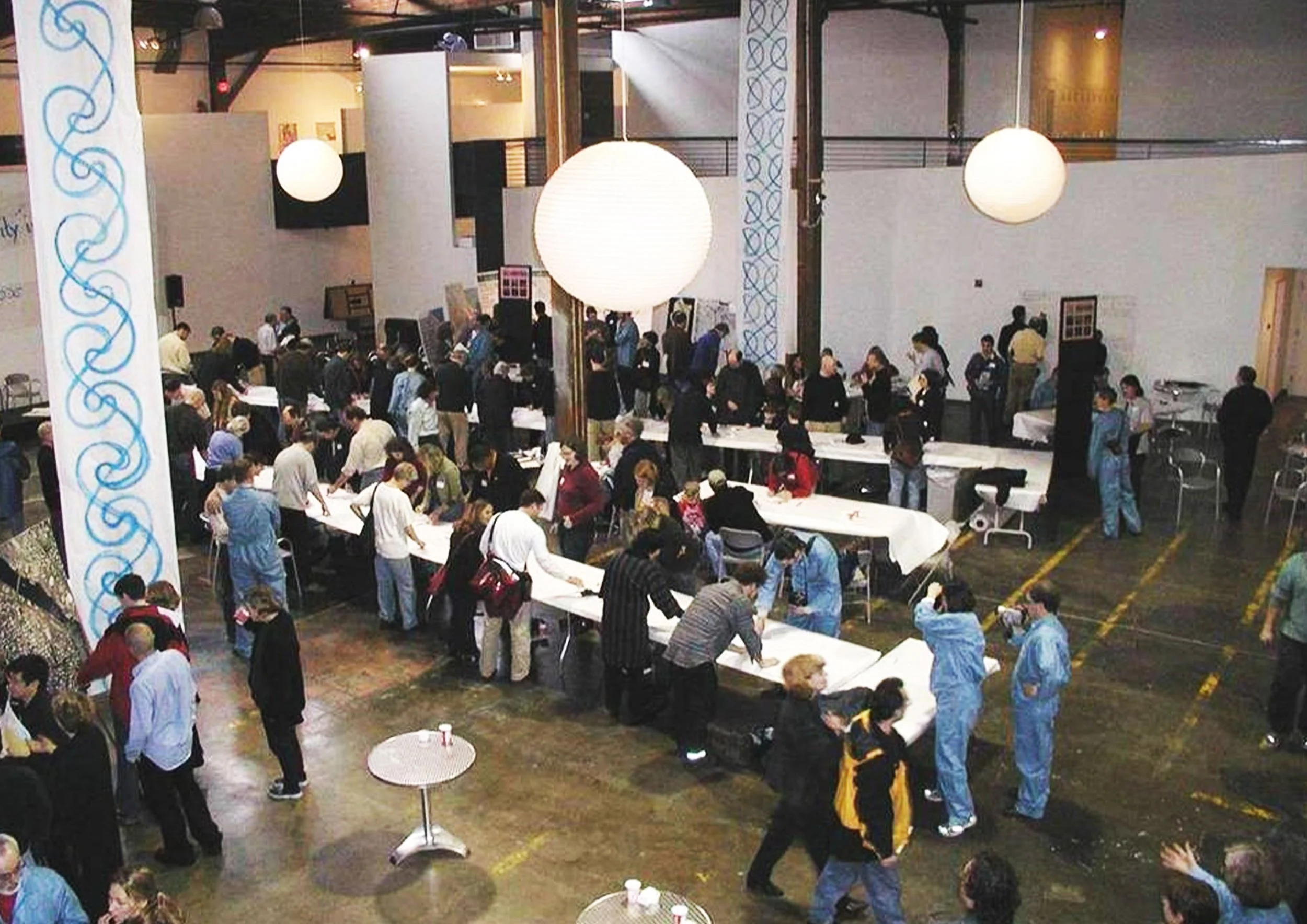
More than 300 citizens were involved in three public events where art, imaginative brainstorming and planning workshops informed and inspired the design process. The park represents the authentic fulfillment of aspirations and desires from a diverse community.
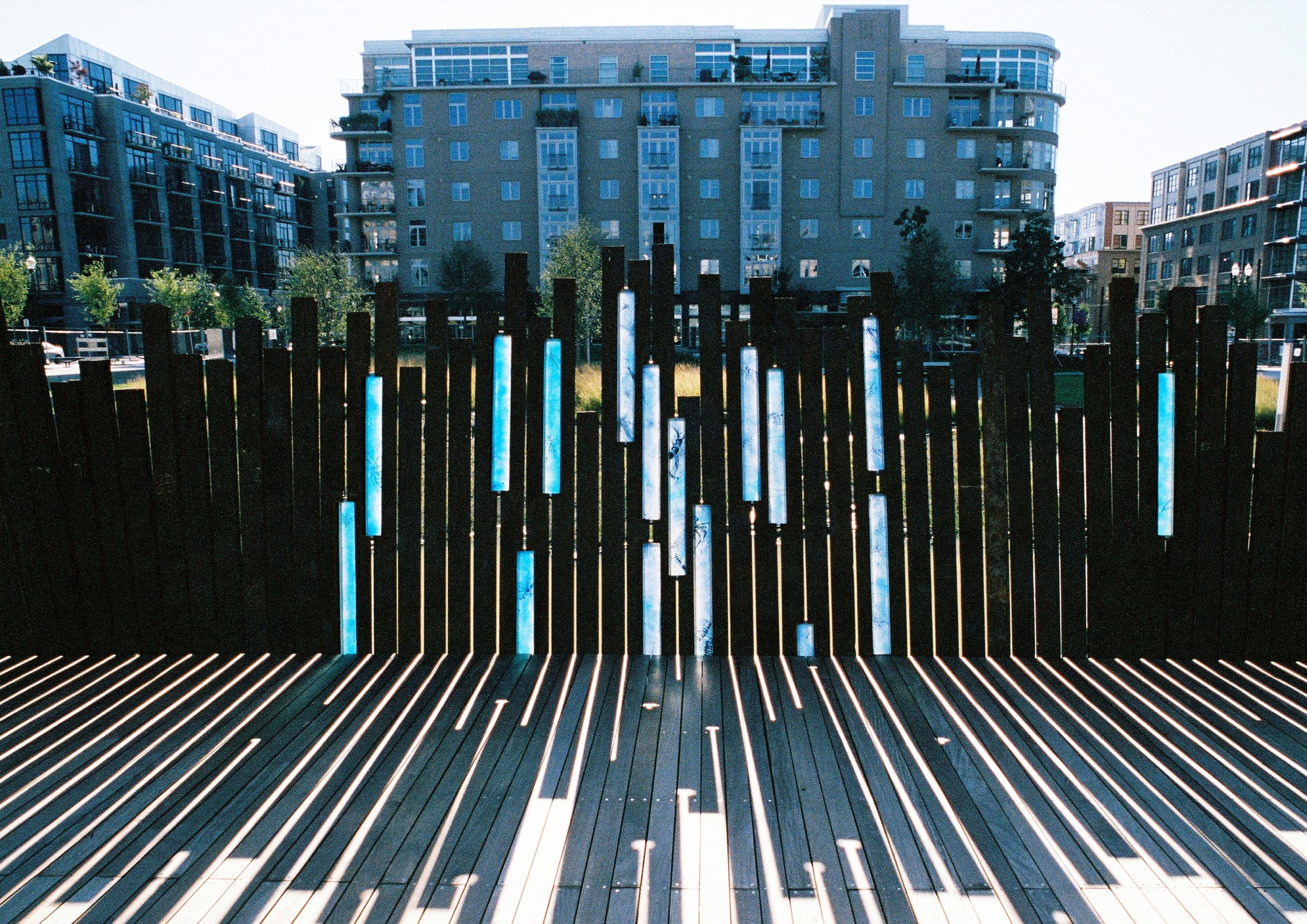
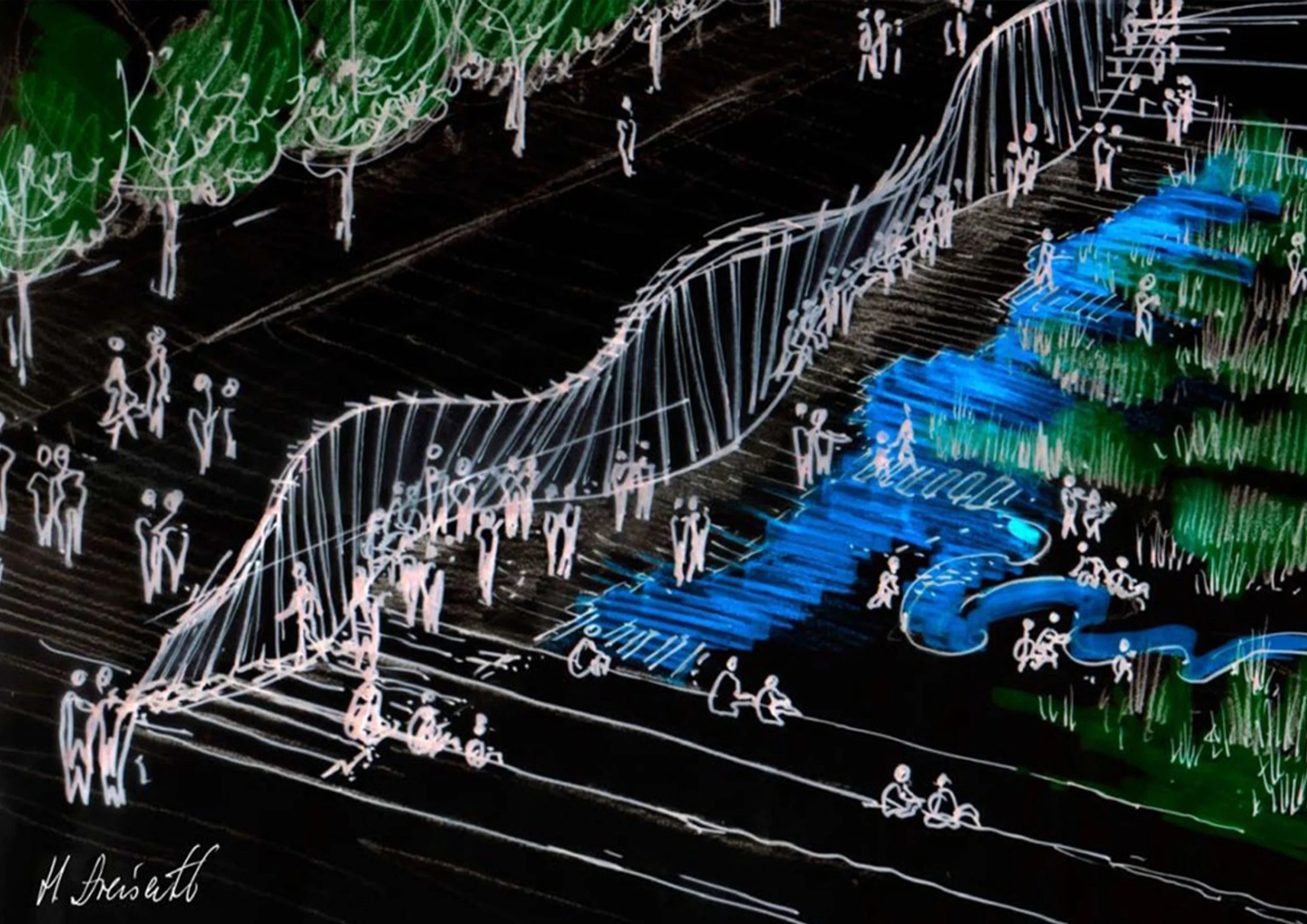
A floating pontoon gracefully traverses the water, seemingly gliding over its concealed and ever-changing depths. On one side of the pond, historic railroad tracks, aptly referred to as the 'Art Wall,' create a striking visual with a juxtaposition of the enduring solidity of the rail tracks against the flexible and undulating motion of the wall. This dynamic structure gracefully oscillates inward and outward, with its top rising and falling, creating a harmonious contrast symbolic of the city's historical fabric.
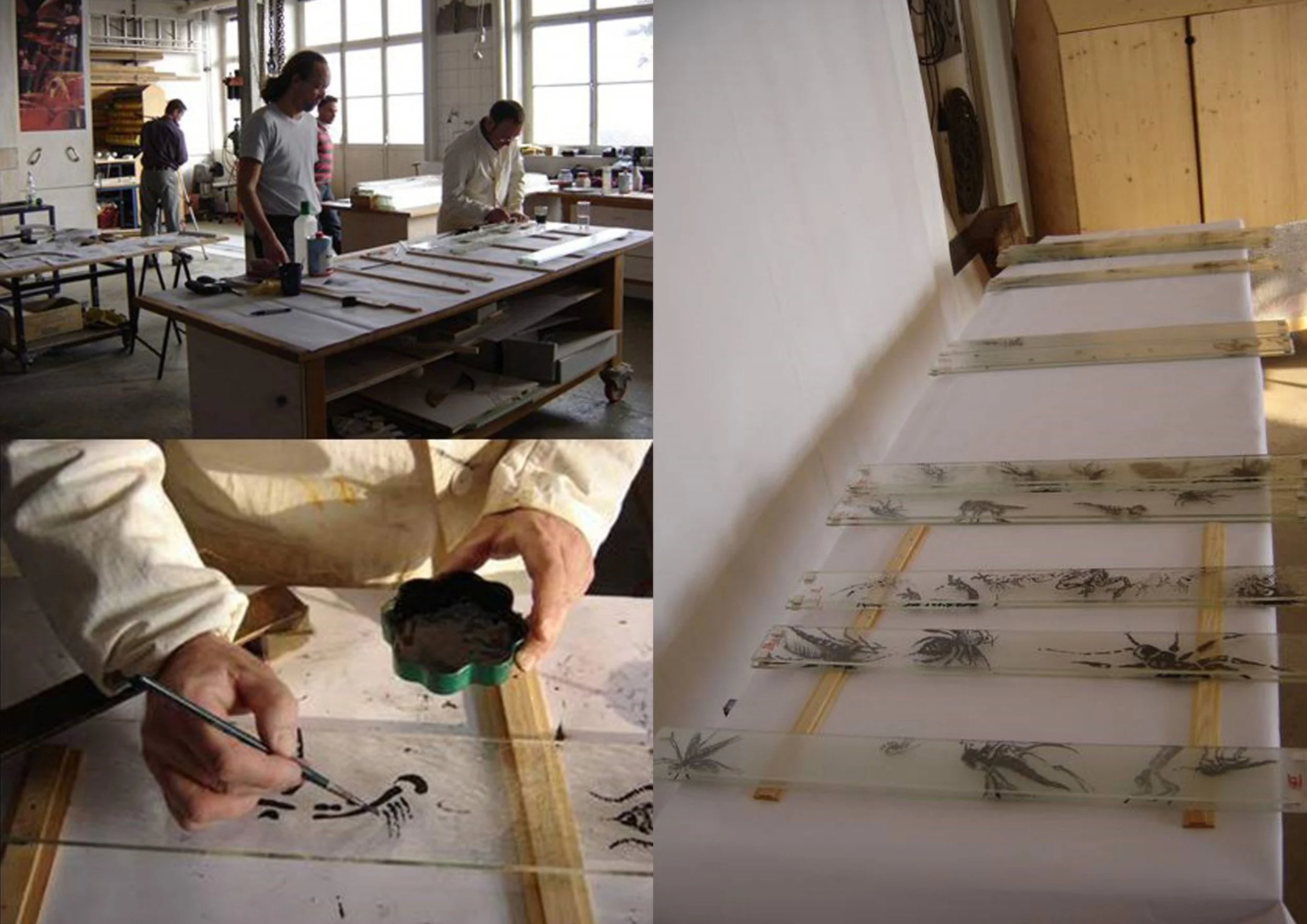
The Art Wall is 60 metres long and composed of 368 rails. 99 pieces of fused glass are inset with images of dragonflies, spiders, amphibians and insects like animals captured in amber, creatures of times and habitats long gone. The images were hand-painted by artist Herbert Dreiseitl directly on Portland glass, which was then fused and melted to achieve the final effect.
Tanner Springs Park is a model of embracing historic local ecology and demonstrating sustainable practices. Three of the sides of the sunken park are lined with steps allowing a terraced, permeable edge for visitors to enter, exit, and sit. It successfully brings together visitors and residents to the former ecology and explains the rich local history of the area.
-
![]()
Ecological path with the regeneration of an old, industrial downtown city neighbourhood, the Pearl District.
-
![]()
The long-forgotten wetland habitat is restored to the full glory of its plants and animals.
-
![]()
More than 300 citizens directly shaped the park's design through participatory public events, making it an authentic fulfillment of community aspirations.
-
![]()
Historic railroad tracks were reused to create an "Art Wall", create a striking visual in the park.
-
![]()
The 60-metre Art Wall is composed of 368 rails with 99 fused glass insets depicting bygone creatures, like animals captured in amber.
-
![]()
The hand-painted images were fused directly onto Portland glass by artist Herbert Dreiseitl.
-
![]()
The park is like a viewport to the past.
-
![]()
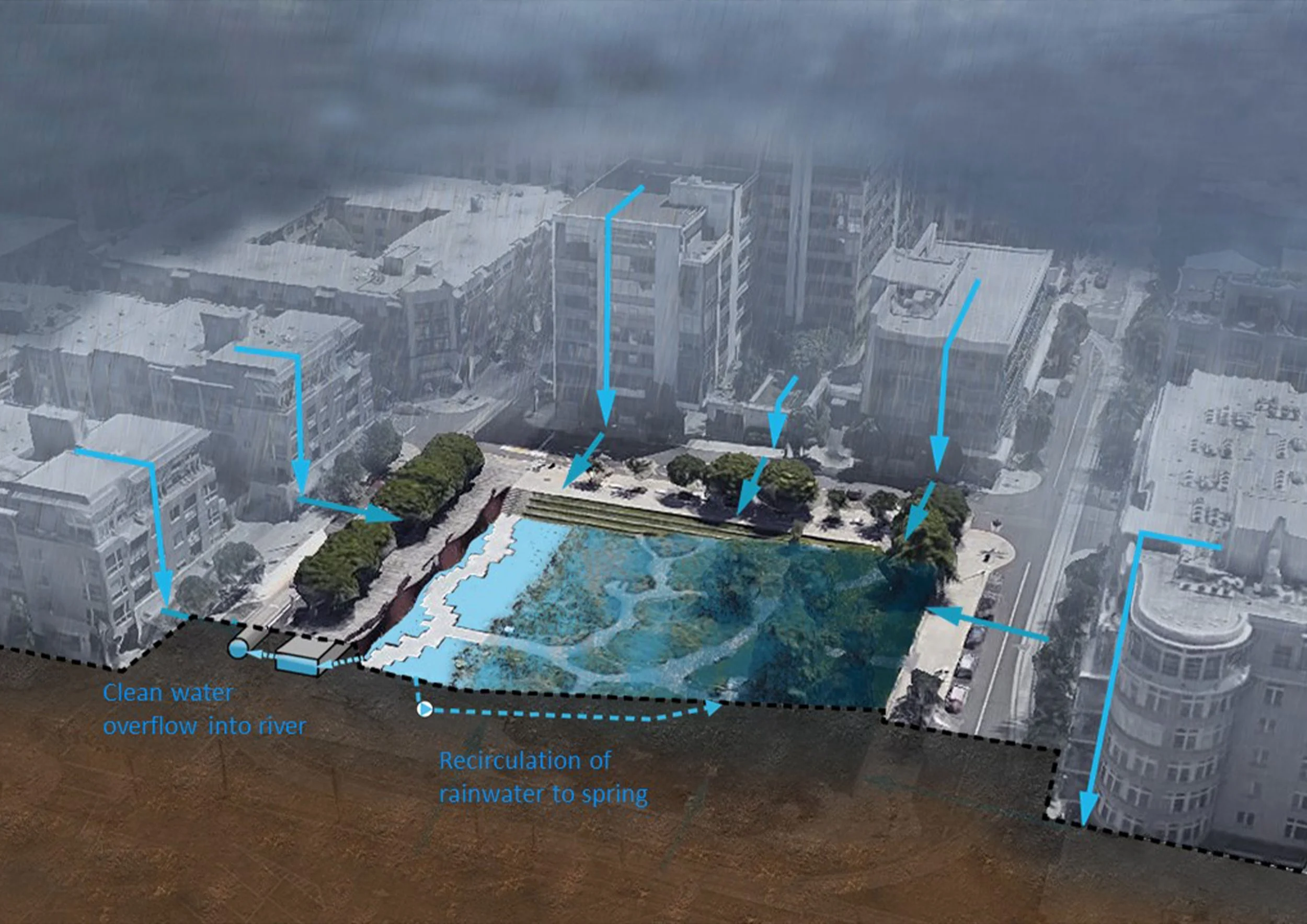
Rainwater Catchment System
-
![]()
Original first sketch of the vision of Tanner Springs Park by Herbert Dreiseitl.