

Blue Green Infrastructure. Climate * Environment

SOLOCLIM: Solutions for Outdoor Climate Adaptation
With rapid urbanization, cities are progressively falling short of sustaining outdoor life. The EU-funded SOLOCLIM project aims to develop a doctoral training program that enables young researchers to generate solutions for the urban outdoors. SOLOCLIM intends to develop such solutions at different scales, encompassing larger neighborhood and city scales, and testing their effects.
DREISEITLconsulting consult the project including the PhD work of the students in the area of landscape architecture with a strong focus on blue and green solutions.

Yes to Braunau!
The district becomes happy, resource-efficient, low-carbon - and remains economically successful. Together with the population and companies, we are developing a strategy for reducing CO2 in an entire region. The central questions of the project Ja-zu-Braunau!
We ran a workshop that discussed innovative ideas for reducing CO2 emissions and increasing well-being in the areas of economy, environment, education, and well-being, together with many stakeholders involved.
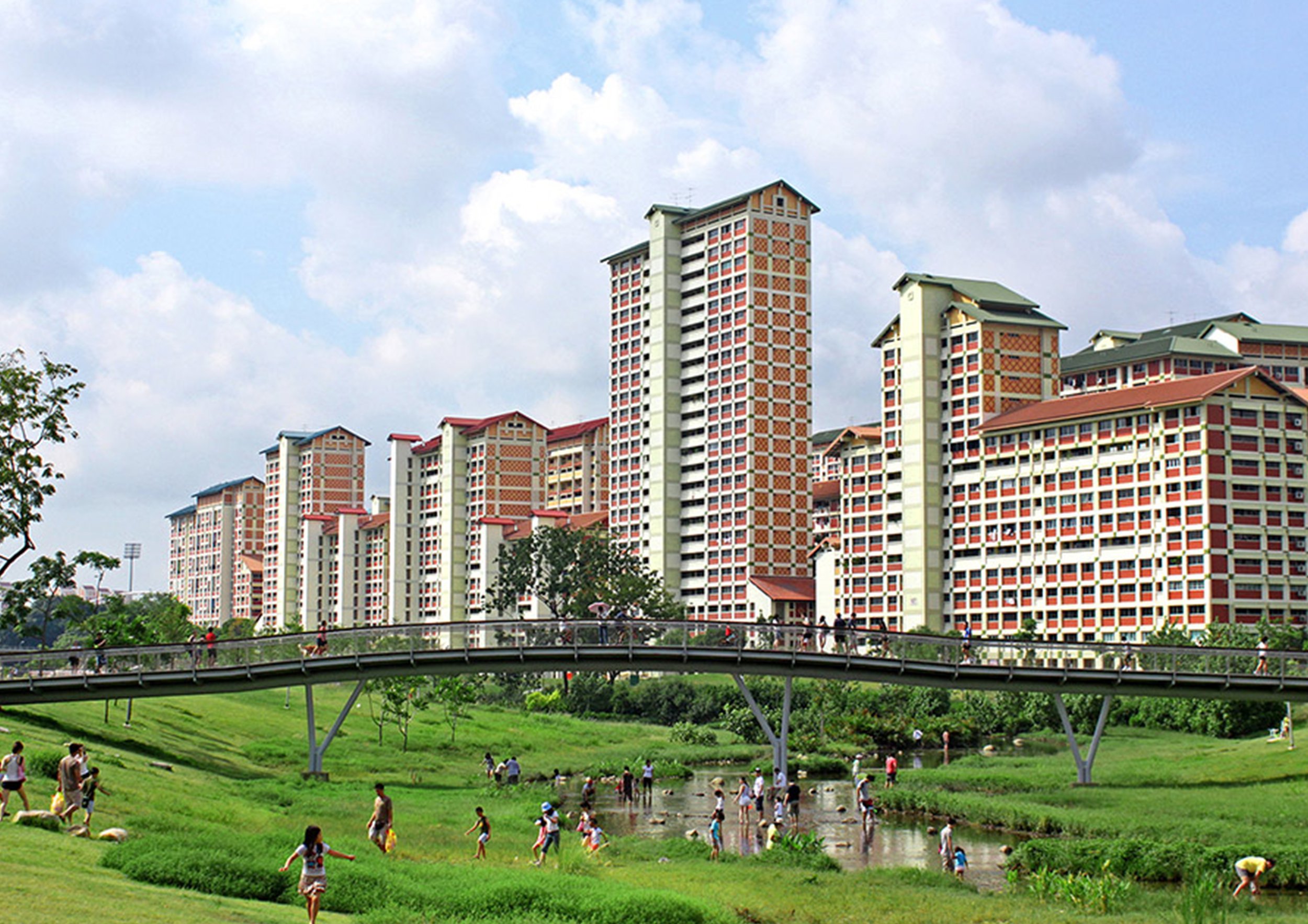
Cost Benefit Analysis of Bishan-Ang Mo Kio Park, Singapore
The main research question focuses on the redevelopment of Bishan-Ang Mo Kio Park and the introduction of how blue-green elements contribute to an increase in value. The main question is divided into a few sub-fields of research that aim at researching:
How does blue and green infrastructure in urban areas impact (both positive and negative) people and society?
How large and significant the impacts of blue and green infrastructure are?
If the impacts of blue-green infrastructures provide society with a positive business case?

Shaping Landscapes
& Human Welfare, Singapore
Comparative Field Study of the Non-Material Effects of Blue-Green Integration in Singapore. A case study examining the effect of integrating Blue and Green Infrastructure (BGI) on different value dimensions.
Authors: Oliver D. Tovatt, Herbert Dreiseitl, Bettina Dreiseitl-Wanschura, 2015


Strengthening Blue-Green Infrastructure (BGI) in Our Cities
Usually, we think of a city as buildings, roads, concrete, asphalt, and all the other hard, grey elements. But what if the city has more than one layer? What if we define a city by looking at water and vegetation as well as elements that shape and improve human life? We call this BGI: Blue-Green Infrastructure – the essential layer in a liveable city.

PlanetYES
With an inter- and trans-disciplinary team of researchers, practitioners, and companies we are developing a model for the community of the 21st century, called PlanetYES.
PlanetYES stands for the sustainable and positive development of regions and cities: socially, ecologically, and economically.

Nature Based Solutions (NBS)
Blue-Green Infrastructure is one of our core areas of expertise and interest. More than 30 years of practical experience, blended with research helps us to consult cities on how to find the best solutions for the implementation of blue-green or nature-based solutions into grey environments. Currently, we are involved in NATURVATION, a Horizon 2020 project.
Naturvation Project
NATure-based URban innoVATION is a 4-year project, funded by the European Commission and involving 14 institutions across Europe in the fields of urban development, geography, innovation studies, and economics. We will seek to develop our understanding of what nature-based solutions can achieve in cities, examine how innovation can be fostered in this domain, and contribute to realizing the potential of nature-based solutions for responding to urban sustainability challenges by working with communities and stakeholders. (Bettina-Dreiseitl Wanschura, Consultant)

CcTalk!
The Federal Environment Agency examined in CcTalK! Together with PlanSinn and Dr. Torsten Grothmann, we explored how Communication on climate change adaptation must be designed to create awareness of the consequences of Climate change and so on. What are the needs for adjustment, the ability to act to improve those affected so appropriate adaptation measures for (personal) provision can be put to concrete action to motivate and acceptance for the adaptation measures of others to raise actors?
⇀ CcTalk!
StartClim 2013: Adaptation to climate change in Austria - "Water"
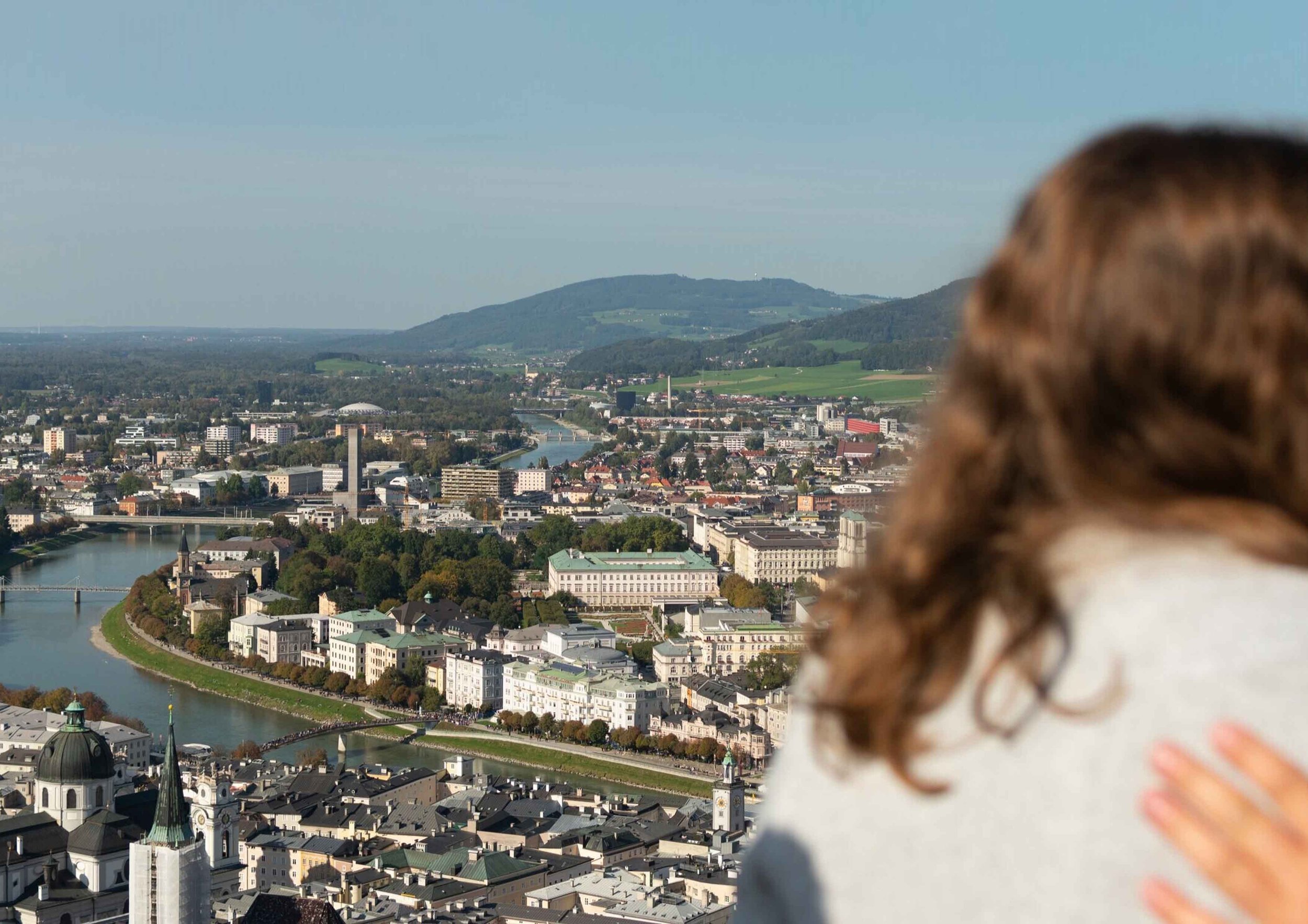
Suggestions for enhancing regional development and spatial planning in flood-prone areas: The imperative is to encourage a new "riparian culture" that focuses on reducing flood damage. The central question is: "How can we best harmonize our living environment with, rather than against, the river?" In doing so, we must consider all potential climate change scenarios. This shift in perspective and values could significantly contribute to promoting a more proactive and positive approach to river environment development. With the implementation of the EU Water Framework Directive, now is an opportune moment to view the river as an interconnected system deserving of the necessary space.
⇀ Adjustment recommendations for the Spatial and regional development in flood-prone areas
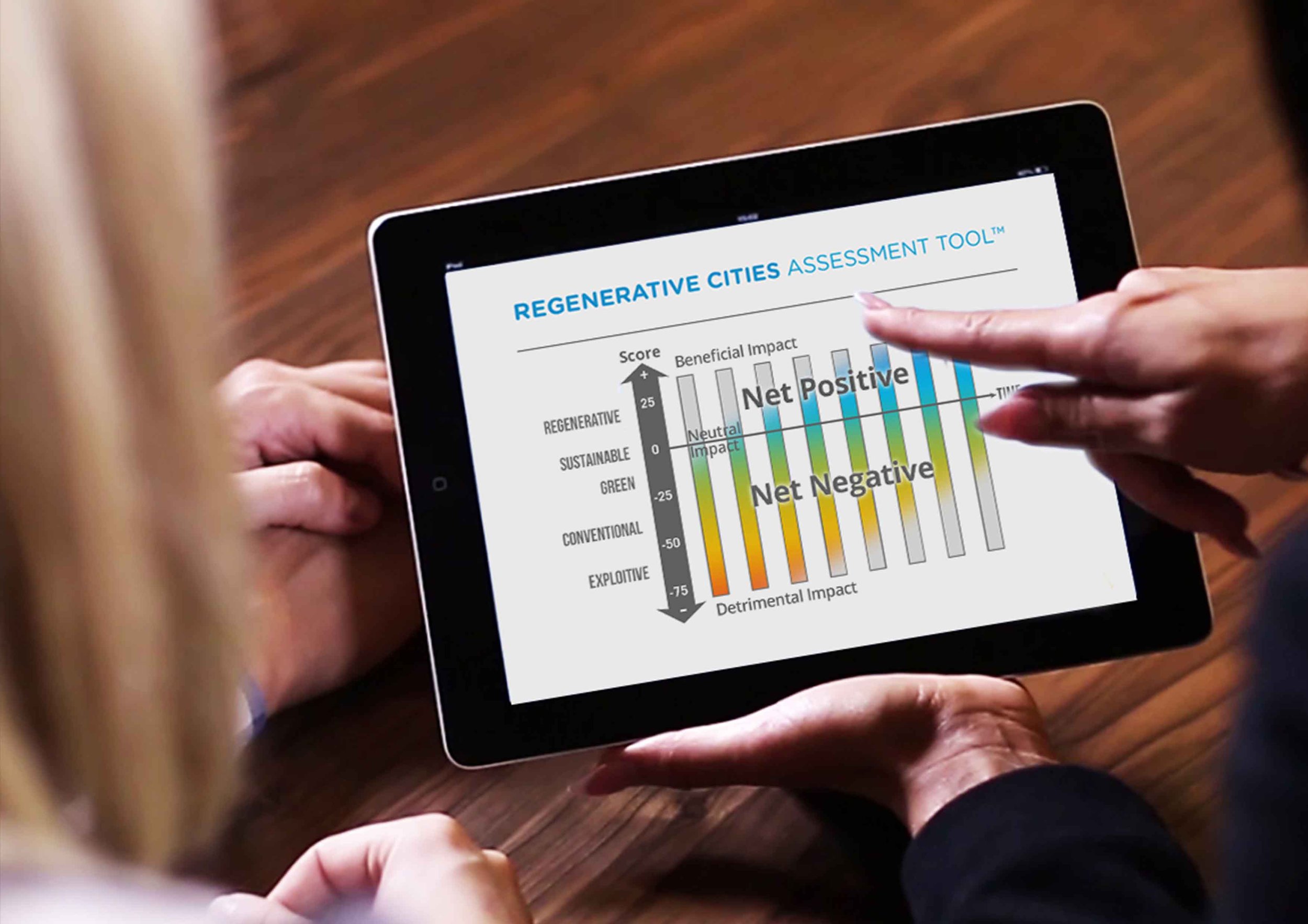
Regenerative Cities Assessment
Research on Assessment Tools for creating regenerative urban and rural areas is another field that we are investigating. Together with the team of Regensia/New York, we consult cities and regions on how to develop in a regenerative way.
⇀ Regensia